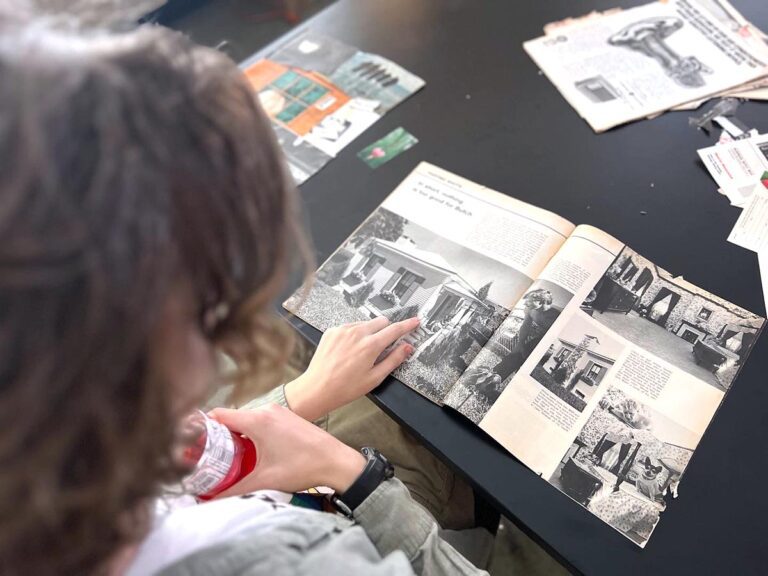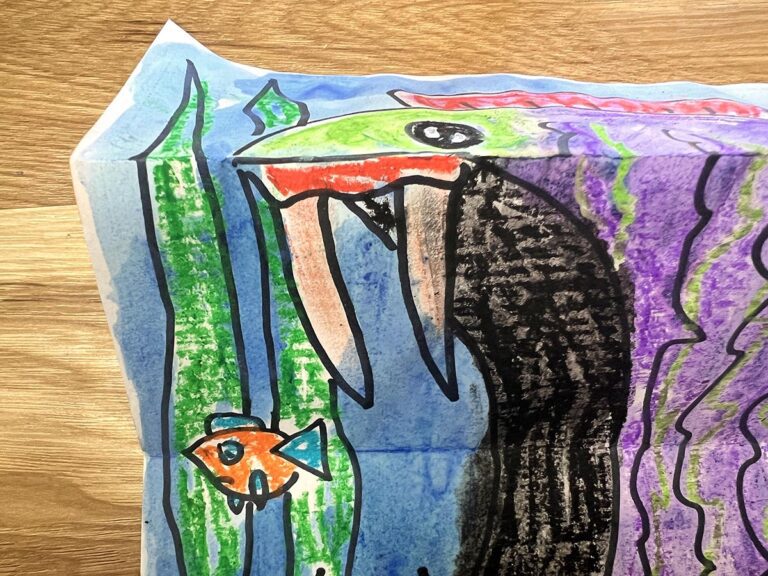
Have you ever noticed that younger students (say, Kindergarten through 4th grade) are more uninhibited with their drawing than older students? Do you wonder why older students tend to lose that freedom?
The answer has to do with brain development.
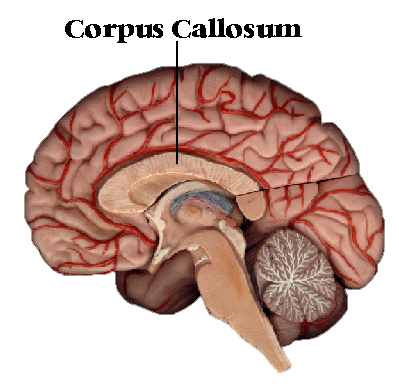 As a student’s brain develops the corpus callosum (the thick bundle of nerves connecting the right hemisphere to the left hemisphere) strengthens. This happens primarily around age 10-12. What happens is the left hemisphere (with strengths in reading and math) becomes more connected with the right hemisphere (with strengths in creativity and emotion). Basically the left hemisphere begins to tell the right hemisphere that they “aren’t doing it right.” Students are no longer happy drawing a hand, for example. They want it to look “right.” Sound familiar?
This is the perfect time to introduce right brain drawing activities.
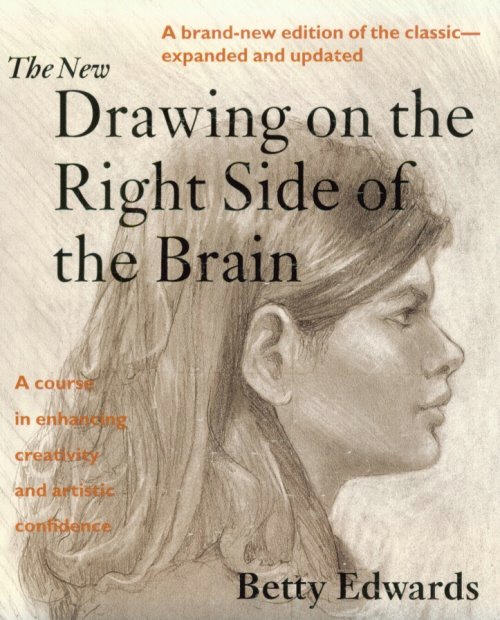
These activities are designed to help students learn to utilize the amazing potential of the right side and learn to draw what they see. To get started, I highly recommend checking out the book and website of renowned right brain drawing guru, Betty Edwards. She has many lesson plan ideas and handouts to help students learn to draw the realistic images they crave.
Here are 3 right brain strategies to try.
1. Work in silence.
Or, work with soft, wordless background music. The idea is to tune the left hemisphere out and let the right side take over, right? Well, the left side likes words and as long as students are talking, their left side is engaged. Try 10-15 minutes of silent work time to help students stay centered and on task.
2. Rotate the paper if students are stuck.
Sometimes they cannot get past one small part of the drawing. (My ear doesn’t look “right.”) Have students rotate their paper by 90 or even 180 degrees and then work on drawing what they see. (It is no longer an ear, it is a line that gently curves down.) This simple maneuver tricks the left brain because it can no longer visualize an ear, which forces students to use their right side and focus on the line. This works especially well during a Grid Drawing Lesson.
3. Let students get lost in the process.
Try a lesson that focuses on a repetitive technique (paper mache, designing a mandala, coil pots, etc.) and watch their inhibitions melt away. Once they have mastered the process, they can forget about the technique and let their right brain explore. The possibilities are endless!
How do you help students develop their right brains?
Do you have any strategies to share?
Magazine articles and podcasts are opinions of professional education contributors and do not necessarily represent the position of the Art of Education University (AOEU) or its academic offerings. Contributors use terms in the way they are most often talked about in the scope of their educational experiences.

 Article