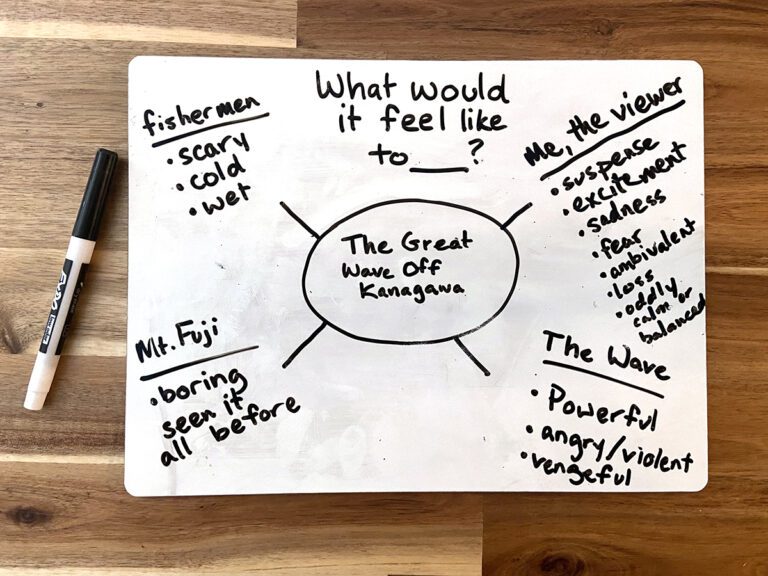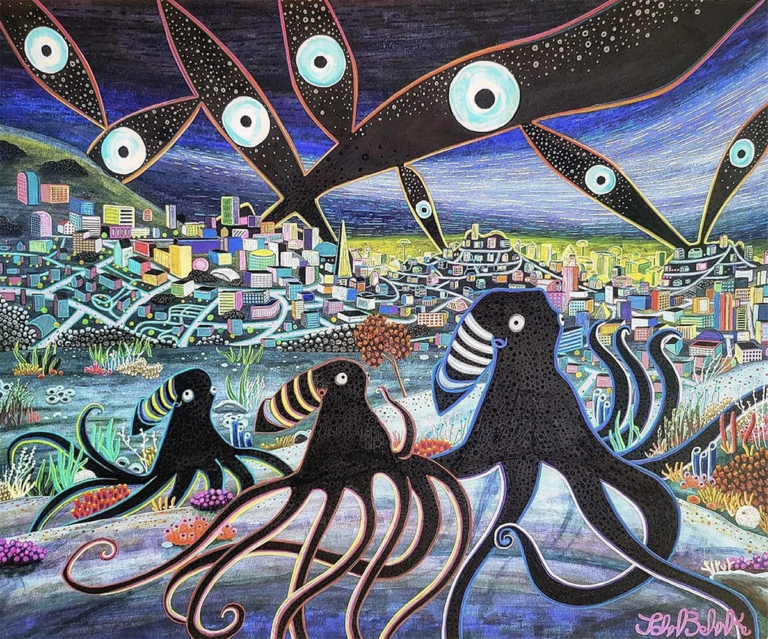
I am totally, head-over-heels in love with cross-curricular planning. Here’s why.
Cross-curricular planning is one of the best ways to make what you do in the art room visible to others. Because of this, it’s a great way to build support for your program.
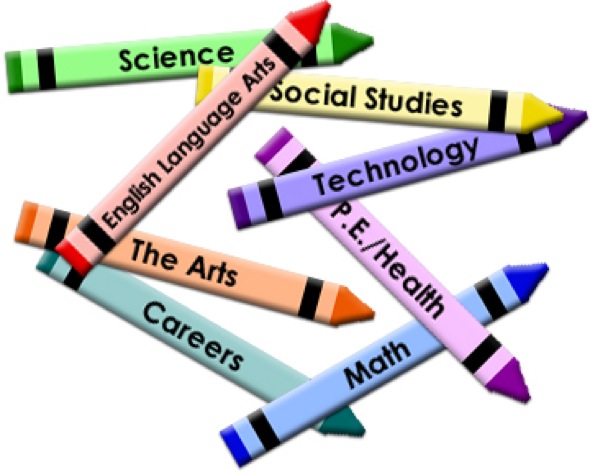
Tying your curriculum to other content areas benefits everyone involved. Classroom teachers love that their content is being reviewed in the art room. I love that my content is being reviewed in the regular ed classroom. Most importantly, the students love it because it allows them to dive deeper into interesting subjects. It’s a win-win-win situation! I suppose we could throw one or two more “wins” in there, because administrators and parents love it, too!
When I first started at my current school three years ago, the classroom teachers had never collaborated with the art teacher before. If you’re in a similar situation, here are a few ideas to get you started.
5 Simple Steps to Start Cross Curricular Planning
1. Make Your Intentions Known
Ask your administrator for 5 minutes at a staff meeting. Give a short speech about how you’d like to collaborate with other teachers to enrich students’ experiences in the art room. You might say something like, “Hello staff. I’d love to try something new this year in the art room. To help our kids make connections, I will be tying some art projects to concepts you are learning about in the classroom. To do this, I need your help. I will be asking for a basic outline of what you teach during each month of the year. Please look for an email coming soon.”
2. Gather Information
The last thing I wanted to do was overwhelm classroom teachers. During the first year I implemented my plan, I only asked for 3 months of information at a time. In addition, I had only one contact person for each grade level.
So, for example, in the fall I emailed one of the second-grade teachers and asked what second graders were studying in October, November, and December. When the beginning of December rolled around, I sent another email asking about January, February, and March. You get the idea.
3. Organize as You Go
As my information began to roll in, I started compiling it in a simple chart. One column contained what the students were learning in their classrooms, and the other contained possible projects I could do in the art room. At the end of the year, I had an awesome resource! Below is the document I use for my second graders.
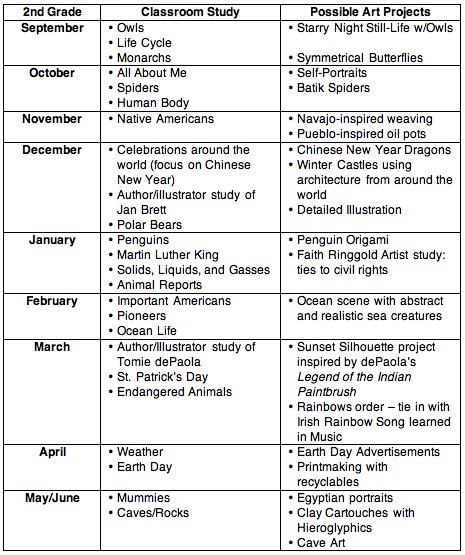
You can download your own blank Cross Curricular planning matrix. Click right here to grab your copy!
4. Keep Your Documents Updated
Now, about three times a year, I just send out the cross-curricular planning documents and ask for feedback. Anything new? Anything different? If so, I update the document.
5. Start Slowly and Keep the Door Open
Last, but not least, remember that you don’t have to tie everything the students are learning into your projects. (Wisconsin Lumber Industry? No thanks.) If you are just starting out, trying one project per semester per grade level might be a good goal. Do whatever feels manageable for you. In addition, remind classroom teachers that you are always open to suggestions. Creative classroom teachers have initiated some of my most successful cross-curricular lessons!
Have you tried cross-curricular planning?
What has your biggest obstacle been? What are your successes?
Magazine articles and podcasts are opinions of professional education contributors and do not necessarily represent the position of the Art of Education University (AOEU) or its academic offerings. Contributors use terms in the way they are most often talked about in the scope of their educational experiences.


 Article